
Have you ever walked into someone’s living room and felt instantly at ease, without being able to explain why? That quiet sense of “this just works” is rarely an accident, and it’s exactly what interior design designmode24 sets out to achieve. It isn’t about chasing whatever look is trending on social media this month. It’s about building rooms that function well, feel personal, and hold up over time.
For most of us, a home has to do more work than it used to. It’s an office, a gym, a place to unwind, and sometimes all three before lunch. That’s why the idea behind interior design designmode24 has picked up so much attention lately — it treats a home as a living system rather than a photo backdrop. Every choice, from a paint color to where an outlet gets placed, is judged by one simple question: does this make daily life easier or harder?
This matters to you because good design shouldn’t require a huge budget or a design degree. Whether you’re furnishing your first apartment, refreshing a house you’ve lived in for a decade, or planning a full renovation, understanding these principles gives you a framework you can actually use — not just admire in a magazine.
What Is Interior Design DesignMode24, Really?
At its simplest, interior design designmode24 is a way of thinking about rooms that puts everyday usability on equal footing with visual appeal. It draws from a few long-standing design traditions — Scandinavian minimalism, Japanese functionality, and a bit of mid-century warmth — but it doesn’t ask you to copy any single style exactly.
Instead, it works more like a checklist you run every room through:
- Does the layout support how people actually move through the space?
- Is there enough light for the tasks that happen there?
- Are storage and clutter under control, or fighting for space with the furniture?
- Does the color palette feel intentional, or just leftover from whatever was on sale?
When those four questions are answered well, a room tends to feel calm and put-together even if the furniture itself is modest. That’s the core promise behind this approach: thoughtful decisions beat expensive ones.
Where the Idea Came From
Modern homes have shrunk in a lot of cities while the number of things we ask them to do has grown. A one-bedroom apartment might need to double as a workspace by day and a place to entertain friends on weekends. Traditional interior design, with its emphasis on formal living rooms and single-purpose spaces, was built for a different era. Interior design designmode24 grew out of that gap — a response to homes that need to flex without feeling chaotic.
Core Principles Behind Interior Design DesignMode24
Once you understand the “why,” the “how” becomes a lot more approachable. A handful of principles show up again and again in this style of thinking, and they translate to almost any room in the house.
Simplicity Without Sacrificing Personality
Minimalism gets a bad reputation for feeling cold or unfinished, but that’s a misunderstanding of what simplicity is supposed to do. The goal isn’t an empty room — it’s a room where nothing is competing for attention that doesn’t deserve it. A single well-chosen piece of art on an otherwise calm wall will always read as more intentional than five mismatched frames crowded together.
A practical way to apply this: before adding something new to a room, ask whether it earns its spot. If a decorative object doesn’t serve a purpose and doesn’t genuinely make you happy to look at, it’s probably just noise.
Function First, Then Beauty
This is probably the most defining trait of this approach. Style decisions get made after function is settled, not instead of it. A gorgeous velvet sofa that’s too deep to sit on comfortably isn’t a win. A pendant light that looks sculptural but casts terrible shadows over the dining table isn’t either.
Some practical questions worth asking room by room:
- Kitchen: Is the space between the stove, sink, and fridge efficient, or are you crossing the room constantly?
- Home office: Is the lighting bright enough to prevent eye strain during a full workday?
- Bedroom: Are lamps positioned so you can actually read in bed without craning your neck?
Answering these honestly tends to reshape a room’s layout more than any color scheme ever could.
Layered Lighting, Not Just One Overhead Fixture
Lighting might be the single most underrated tool in any home. A room lit only by one ceiling fixture almost always feels flat and a bit clinical, no matter how nice the furniture is. Designers working within this framework typically layer three types of light:
- Ambient light — the general, overall illumination in a room, usually from ceiling fixtures or natural daylight
- Task light — focused light for specific activities, like reading lamps or under-cabinet kitchen lighting
- Accent light — smaller, decorative light that adds depth, such as a floor lamp in a corner or LED strips behind a shelf
Combining all three creates visual depth that a single bright bulb simply can’t replicate. It’s a small shift that makes an outsized difference, especially in the evening.
Color Palettes That Feel Considered
Color choice under this approach leans toward a restrained, layered look rather than bold, single-tone rooms. Soft neutrals — warm whites, greiges, muted sage, and dusty blues — tend to form the base, with texture and a small number of accent colors doing the heavier visual lifting.
The reasoning is practical as much as aesthetic. Neutral bases age better, cost less to update when trends shift, and make it easier to swap in seasonal accents like cushions or throws without repainting an entire room.
Applying Interior Design DesignMode24 Room by Room
Principles are useful, but seeing how they play out in specific rooms makes them much easier to act on. Here’s a breakdown of how this design thinking typically shows up across a home.
Living Rooms
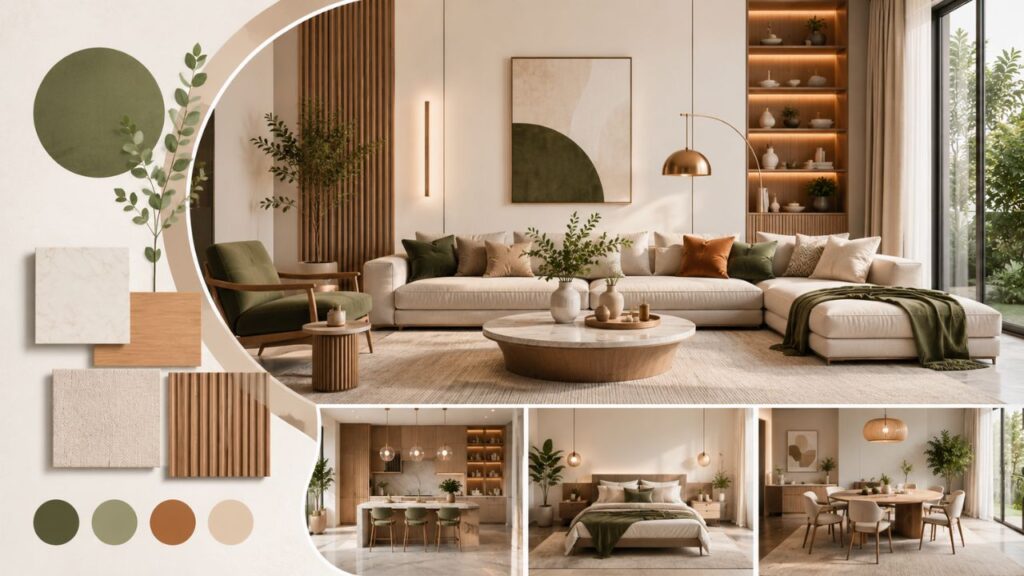
The living room usually carries the most weight in a home because it hosts the widest range of activities — hosting guests, watching a movie, reading, sometimes even working. Open, flexible seating arrangements tend to work better than rigid, formal layouts. A sectional that can be reconfigured, a coffee table with hidden storage, and a rug that anchors the seating area without overwhelming the room are common choices.
Texture plays a big role here too. A linen sofa paired with a chunky knit throw, a stone or marble coffee table, and a couple of wood accents create warmth without requiring a lot of color. It’s the contrast in materials, not the number of objects, that gives the room depth.
Bedrooms
Bedrooms are treated almost like the opposite of the living room — the goal is to remove stimulation, not add it. Soft, breathable bedding, low-glare lighting, and a genuinely decluttered surface area (nightstands especially) help signal to your brain that it’s time to slow down. Blackout curtains, a headboard in a natural material like wood or woven cane, and a muted color palette are common recommendations.
One detail that gets overlooked constantly: nightstand lamp height. If the bottom of the lampshade sits above eye level when you’re lying down, it will glare rather than illuminate — a small fix that makes reading in bed genuinely more comfortable.
Kitchens
Kitchens are judged almost entirely on function within this approach, and the aesthetics follow from good workflow. The “working triangle” between the stove, sink, and refrigerator still matters — the shorter and more logical those paths are, the easier cooking becomes. Concealed storage, pull-out organizers, and durable countertop materials tend to be prioritized over decorative elements that don’t hold up to daily use.
That said, kitchens still get personality through smaller touches: open shelving with a handful of curated items, a statement pendant light over an island, or a tile backsplash that adds pattern without overwhelming the room.
Bathrooms
Bathrooms benefit enormously from restraint. Large mirrors that bounce light around a small space, neutral large-format tile that minimizes grout lines, and good ventilation to control humidity are the unglamorous basics that make the biggest difference. From there, a few well-placed accessories — a wood stool, a linen bath mat, greenery that tolerates humidity — add warmth without clutter.
Home Offices
More people are working from home at least part of the week, and a poorly designed workspace shows up fast in the form of fatigue and distraction. Desk placement near natural light, a chair that actually supports your back for eight hours, and closed storage to keep paperwork out of sight all matter more than a trendy desk accessory set. Cable management deserves more attention than it usually gets — visible tangles of cords undercut an otherwise calm room instantly.
Practical Tips for Small and Compact Spaces
Not everyone has room to spare, and this approach puts particular emphasis on solving that problem well rather than just working around it.
- Multi-functional furniture: A storage ottoman, a sofa bed for guests, or an extendable dining table lets one piece serve two purposes without adding bulk.
- Vertical storage: Floating shelves and tall, narrow bookcases use wall space that floor space can’t offer, especially in small bedrooms or entryways.
- Mirrors placed opposite windows: This bounces natural light deeper into a room and makes the space read as larger than it is.
- Light, unified flooring: Consistent flooring from room to room removes visual “stopping points” that make a small home feel chopped up.
- Furniture with visible legs: Sofas and chairs that sit slightly off the floor let light pass underneath, which keeps a room from feeling heavy.
None of these require a renovation budget. Most can be done over a weekend, which is part of why this framework has resonated with renters and first-time homeowners alike.
Common Mistakes to Avoid
Even with good intentions, certain habits work against these goals. A few of the most frequent ones:
- Buying furniture that’s too large for the room, which makes even a well-decorated space feel cramped
- Choosing paint colors based on trends rather than the room’s natural light, leading to walls that look muddy or washed out at different times of day
- Filling every wall and shelf, leaving no visual breathing room
- Relying on a single overhead light source instead of layering ambient, task, and accent lighting
- Prioritizing a “theme” over comfort, resulting in rooms that photograph well but aren’t pleasant to actually live in
Avoiding these isn’t about being a design expert. It’s about slowing down before a purchase and asking whether it genuinely fits the room’s scale, light, and daily use.
How to Start Applying This Approach at Home
You don’t need to redo an entire home at once, and honestly, trying to do so tends to backfire. A more sustainable approach:
- Pick one room. Start with the space you use most, since improvements there will be felt daily.
- Audit what’s already working. Some furniture and layouts just need better lighting or fewer competing accessories, not a full replacement.
- Remove before you add. Clear out anything that doesn’t serve a clear purpose before shopping for anything new.
- Fix lighting early. It’s often the cheapest change with the biggest visible impact.
- Layer in texture and color gradually. A neutral base gives you room to experiment with accents over time, rather than committing to a look you might tire of in a year.
This slower, room-by-room process is far more sustainable than an all-at-once overhaul, both for your budget and for how confident you’ll feel in the final result.
Budget-Friendly Ways to Apply These Ideas
You don’t need a big renovation budget to see real results. A lot of the impact comes from reallocating money you’d already spend anyway, rather than spending more overall.
- Repaint before you replace. A fresh coat of paint in a warm neutral tone can change how a room feels more than new furniture would, at a fraction of the cost.
- Shop your own house first. Moving a lamp from a rarely used guest room into your living room, or swapping artwork between rooms, costs nothing and often feels like new decor.
- Invest in a few durable pieces rather than many cheap ones. A well-made sofa or dining table will outlast several budget replacements, which usually makes it the better long-term value.
- Use textiles to update a room seasonally. Cushion covers, throws, and rugs are inexpensive ways to shift a room’s mood without touching the furniture itself.
- Prioritize lighting upgrades over decorative purchases. A pair of warm-toned lamps typically does more for a room’s atmosphere than a new piece of wall art.
Materials and Sustainability Considerations
Longevity is a quieter but important part of this design philosophy. Rooms built around trend-driven, low-cost materials tend to need replacing sooner, which ends up costing more over time and generating more waste. Natural materials — solid wood, linen, wool, stone, and ceramic — tend to age gracefully, developing character rather than looking worn out.
This doesn’t mean everything needs to be expensive or handmade. It means being selective about where money goes. A budget sofa frame paired with a well-made, replaceable cover can be a smart middle ground, since the fabric wears out long before the frame does. Similarly, energy-efficient lighting isn’t just a sustainability choice — it also tends to produce a warmer, more flattering light quality than older bulb types, which lines up naturally with the layered lighting approach discussed earlier.
Choosing durable materials also reduces how often a room needs to be redecorated from scratch, which keeps the overall look more cohesive over the years instead of feeling like a patchwork of different eras and trends.
Seasonal Refreshes Without a Full Redesign
One appealing part of this approach is that a room doesn’t need to be redone to feel current. Small, seasonal swaps keep a space feeling fresh:
- Swap heavier textiles like wool throws and velvet cushions for lighter linen and cotton in warmer months.
- Rotate a few decorative objects in and out of storage rather than displaying everything year-round — this alone makes items feel more special when they do appear.
- Bring in seasonal greenery or fresh flowers, which add color and life without any permanent commitment.
- Adjust lighting warmth where possible; cooler-toned bulbs can feel more energizing in summer, while warmer tones suit colder months.
These small rotations keep a home from feeling static, without requiring the time, cost, or waste of a full redesign every year.
Frequently Asked Questions
What exactly does interior design designmode24 mean?
It refers to a design approach that prioritizes function, comfort, and simplicity together rather than treating aesthetics as the only goal. It borrows from minimalist and functionalist traditions but adapts them for how people actually live today.
Is this style only suitable for modern homes?
No. The underlying principles — good lighting, sensible layouts, decluttered surfaces, and a considered color palette — work in traditional, transitional, and modern homes alike. It’s less about a specific look and more about how decisions get made.
Do I need a professional designer to apply these ideas?
Not necessarily. Many of the principles, like decluttering, improving lighting, and choosing a neutral base palette, can be handled without professional help. A designer becomes more valuable for structural changes, custom furniture, or if you want a fully cohesive plan across an entire home at once.
What’s the fastest way to make a room feel more put-together?
Lighting and decluttering usually deliver the most noticeable change for the least effort. Removing items that don’t serve a purpose and adding a warm secondary light source, like a lamp instead of relying only on an overhead light, can transform a room in an afternoon.
How important is color in this approach?
Color matters, but it’s treated as a supporting element rather than the star of the room. A neutral base with one or two considered accent colors tends to age better and feel calmer than a room built around several bold colors at once.
Can this approach work in a rented apartment?
Yes, and it’s arguably where it’s most useful. Since major renovations usually aren’t an option for renters, the emphasis on furniture choice, lighting, and layout — rather than permanent changes — makes it easy to apply without touching the walls or floors.
What’s the biggest mistake people make when trying this style?
Buying too much at once. The approach works best when applied gradually, with each new piece chosen deliberately rather than as part of a rushed, one-time shopping trip.
Does this design approach only apply to homes?
While it’s most commonly discussed in the context of residential spaces, the same principles — function first, thoughtful lighting, restrained color, decluttered layouts — apply just as well to small offices, studios, and other work environments.
Bringing It All Together
Good interior design isn’t about following every trend or spending beyond your means — it’s about making a series of small, considered decisions that add up to a home that actually works for you. That’s the real value behind interior design designmode24: it gives you a practical lens for evaluating your space, room by room, without demanding a total overhaul or a professional budget.
Start small. Fix the lighting in one room, clear a cluttered surface, or swap in a neutral base you can build on over time. The changes don’t have to be dramatic to be meaningful — and more often than not, it’s the quiet, functional improvements that end up making a house feel like home.