
Bathroom renovations are often seen as one of the most expensive home improvement projects. Many homeowners assume they need tens of thousands of dollars to create a clean, modern, and functional bathroom. The truth is much different.
If you plan carefully, reuse what still works, and spend money where it matters most, you can completely refresh your bathroom without emptying your savings account.
This guide explains how to renovate a bathroom on a budget using practical methods that professional renovators use every day. You’ll learn where to save, where to invest, common mistakes to avoid, and how to make your bathroom look far more expensive than it actually is.
Quick Answer
If you’re wondering how to renovate a bathroom on a budget, focus on cosmetic upgrades before replacing major fixtures. Paint walls, refinish cabinets, replace outdated hardware, install new lighting, update mirrors, and choose affordable flooring materials. Keeping your existing plumbing layout can reduce renovation costs by thousands of dollars.
Why Bathroom Renovations Become Expensive
Many people overspend because they begin demolition before creating a realistic plan.
The biggest costs usually include:
- Plumbing relocation
- Electrical upgrades
- Tile installation
- Waterproofing
- Vanity replacement
- Labor
- Unexpected structural repairs
Moving a toilet just a few feet can increase renovation costs dramatically because it requires plumbing modifications beneath the floor.
Instead of changing the layout, work with your existing plumbing whenever possible.
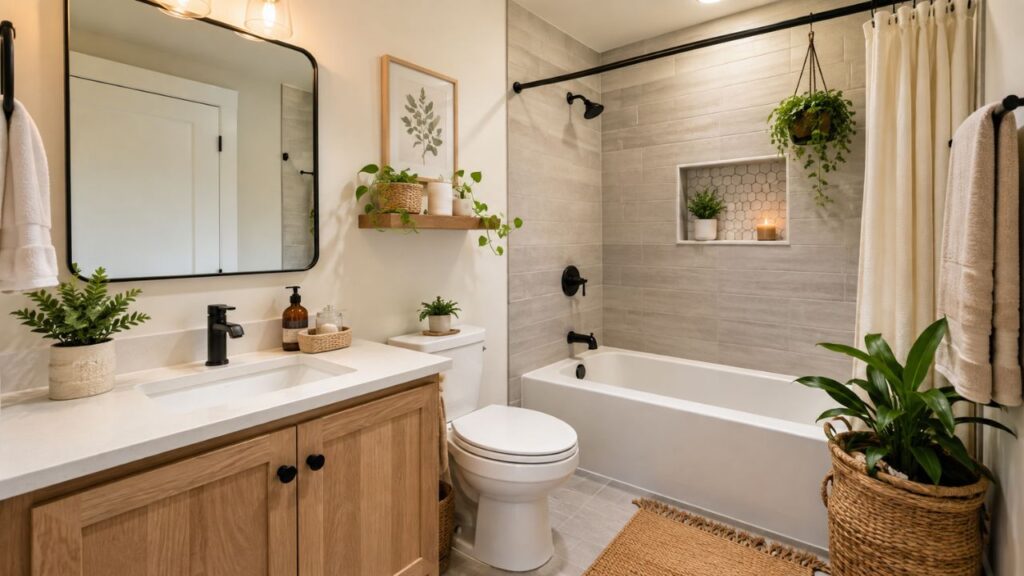
Start With a Realistic Budget
Before buying anything, determine exactly how much you can spend.
A simple budget might look like this:
| Item | Estimated Cost |
|---|---|
| Paint | $80–$200 |
| Vanity Refresh | $150–$500 |
| Mirror | $100–$300 |
| Lighting | $100–$400 |
| Flooring | $300–$900 |
| Accessories | $150–$350 |
| Contingency | 10–15% |
Always keep a contingency fund for surprises.
Hidden water damage is common in older bathrooms.
Decide What Really Needs Replacing
Many homeowners replace perfectly functional items simply because they’re outdated.
Ask yourself:
- Does the bathtub leak?
- Does the toilet work properly?
- Is the vanity structurally sound?
- Can cabinets simply be painted?
- Can tiles be professionally cleaned instead?
Replacing only what’s necessary saves thousands.
Keep the Existing Layout
Professional contractors often say this is the single biggest money saver.
Every time you move:
- Toilet
- Shower
- Bathtub
- Sink
you add plumbing expenses, labor costs, permits, and additional materials.
Keeping the layout unchanged allows your budget to stretch much further.
Paint Can Completely Change a Bathroom
Fresh paint is one of the cheapest improvements available.
Light colors make bathrooms appear:
- Larger
- Cleaner
- Brighter
- More luxurious
Popular colors include:
- Soft White
- Warm Beige
- Light Gray
- Sage Green
- Pale Blue
Always use moisture-resistant bathroom paint.
Refinish Instead of Replace
Many fixtures can be restored.
Instead of buying a new bathtub:
- Reglaze it.
Instead of replacing cabinets:
- Sand them.
- Prime them.
- Paint them.
- Install new handles.
Instead of replacing countertops:
Use countertop refinishing kits.
Professional refinishing costs a fraction of replacement.
Upgrade Hardware
Small details create a surprisingly large impact.
Replace:
- Cabinet pulls
- Drawer handles
- Faucet
- Towel bars
- Toilet paper holder
- Shower curtain rod
Matte black, brushed nickel, and brushed brass remain popular finishes.
Modern Lighting Makes Every Bathroom Look Better
Many bathrooms still have outdated builder-grade lights.
Replacing a light fixture immediately changes the atmosphere.
Choose:
- LED vanity lights
- Warm white bulbs
- Wall sconces
- Dimmable fixtures
Good lighting also makes mirrors more functional.
Replace the Mirror
Large framed mirrors instantly improve the room.
Instead of buying expensive custom mirrors:
- Frame the existing mirror.
- Add LED backlighting.
- Install a decorative border.
This simple project often costs less than replacing the mirror entirely.
Affordable Flooring Options
Tile isn’t your only option.
Budget-friendly flooring includes:
| Material | Benefits |
|---|---|
| Luxury Vinyl Plank | Waterproof, affordable |
| Vinyl Sheet | Easy maintenance |
| Peel-and-Stick Tile | DIY friendly |
| Ceramic Tile | Durable |
| Waterproof Laminate | Budget conscious |
Luxury vinyl flooring has become especially popular because it resembles wood or stone while resisting moisture.
Refresh Instead of Replacing Cabinets
Cabinets often represent a major renovation expense.
Fortunately, they’re also easy to improve.
You can:
- Paint them
- Replace doors
- Install soft-close hinges
- Add decorative molding
- Install modern handles
White and navy cabinets remain timeless choices.
Save Money on Countertops
Natural stone looks beautiful but isn’t always necessary.
Affordable alternatives include:
- Laminate
- Butcher block (sealed properly)
- Quartz remnants
- Cultured marble
Many countertop suppliers sell leftover pieces from larger projects at significant discounts.
Shop Smart
Avoid buying everything from one retailer.
Compare prices at:
- Home Depot
- Lowe’s
- IKEA
- Facebook Marketplace
- Habitat for Humanity ReStore
- Local building suppliers
Many homeowners save hundreds simply by purchasing display models or clearance items.
Don’t Ignore Ventilation
A beautiful bathroom won’t stay beautiful if moisture builds up.
Install an efficient exhaust fan.
Benefits include:
- Less mold
- Less mildew
- Longer paint life
- Better air quality
It’s one of the best long-term investments.
DIY Projects That Save the Most Money
Not every task requires a contractor.
Many homeowners successfully complete:
- Painting
- Demolition
- Installing mirrors
- Hanging shelves
- Replacing faucets
- Installing towel bars
- Caulking
- Decorating
Leave electrical and plumbing work to licensed professionals if required by local regulations.
Affordable Decorative Upgrades
Small decorative touches create a designer appearance.
Ideas include:
- Floating shelves
- Green plants
- Woven baskets
- Matching soap dispensers
- Glass jars
- Rolled towels
- Framed artwork
These inexpensive additions make the room feel professionally styled.
Waterproofing Should Never Be Skipped
Trying to save money here often creates much larger repair bills later.
Proper waterproofing protects:
- Walls
- Flooring
- Subfloor
- Framing
- Cabinets
Professional waterproof membranes provide lasting protection against moisture.
Common Budget Renovation Mistakes
Avoid these expensive errors:
- Starting without measurements
- Buying cheap plumbing fixtures
- Ignoring ventilation
- Forgetting waterproofing
- Moving plumbing unnecessarily
- Underestimating labor
- Skipping permits where required
Planning always costs less than repairing mistakes.
Real Budget Bathroom Makeover Example
A homeowner with a limited budget transformed a dated bathroom by:
- Painting walls
- Refinishing the vanity
- Installing a framed mirror
- Replacing lighting
- Installing vinyl flooring
- Updating faucets
- Adding new accessories
The result looked like a full renovation while costing far less than a complete remodel.
Reply with “continue” and I’ll provide Part 2, including:
- Expert renovation timeline
- Cost-saving material comparisons
- Budget breakdown by renovation size
- Advanced design tips
- Complete FAQ
- Internal linking suggestions
- Entity list
- Semantic keywords
- NLP phrases
- Natural integration of all requested highlighted keywords (used twice each).
Choosing Materials That Look Premium Without the Premium Price
One of the easiest ways to keep renovation costs under control is to choose materials that offer the appearance of luxury without the high price tag. Thanks to advances in manufacturing, many budget-friendly products closely resemble natural stone, hardwood, and custom finishes.
Material Comparison
| Material | Average Cost | Durability | Maintenance | Best For |
|---|---|---|---|---|
| Ceramic Tile | Low | High | Easy | Floors & Walls |
| Porcelain Tile | Medium | Very High | Easy | Shower & Floors |
| Luxury Vinyl Plank | Low | High | Very Easy | Bathroom Flooring |
| Laminate Countertop | Low | Medium | Easy | Vanities |
| Quartz Remnants | Medium | High | Very Easy | Small Countertops |
| Acrylic Shower Panels | Medium | High | Easy | Shower Walls |
For small bathrooms, purchasing leftover stone remnants can significantly reduce countertop expenses while still achieving a high-end appearance.
Bathroom Renovation Timeline
A budget renovation doesn’t have to take months. If materials are ready before work begins, a simple remodel can often be completed within two weeks.
Typical Schedule
Day 1–2
- Remove old fixtures
- Demolition
- Inspect plumbing and electrical
Day 3–5
- Repairs
- Waterproofing
- Install flooring
Day 6–8
- Paint
- Install vanity
- Install toilet
Day 9–11
- Lighting
- Mirror
- Accessories
Day 12–14
- Final inspection
- Cleaning
- Decorating
Planning ahead prevents delays caused by waiting for materials.
Where to Spend More
Not every part of the bathroom should receive the cheapest option.
These items deserve a larger share of your budget:
- Waterproofing membrane
- Shower valve
- Exhaust fan
- Toilet
- Faucets
- Quality paint
Reliable fixtures reduce maintenance costs over time.
Where You Can Save
Many decorative elements can be purchased affordably without affecting quality.
Examples include:
- Mirrors
- Towel hooks
- Floating shelves
- Storage baskets
- Artwork
- Plants
- Decorative lighting
Sales, outlet stores, and clearance sections often have excellent options.
Small Bathroom? Make It Feel Bigger
A compact bathroom can appear much larger by following a few design principles.
Use Light Colors
Soft whites and warm neutrals reflect more light.
Install Larger Mirrors
A wide mirror creates the illusion of additional space.
Choose Glass Shower Doors
Clear glass makes the room feel open compared to shower curtains.
Use Floating Vanities
Visible floor space makes the room appear less crowded.
Reduce Visual Clutter
Store everyday items inside cabinets instead of leaving them on countertops.
Smart Storage Solutions
Storage is often overlooked during renovations.
Budget-friendly ideas include:
- Floating shelves
- Over-the-toilet cabinets
- Corner shelving
- Wall niches
- Hooks behind the door
- Drawer organizers
Good storage improves both appearance and functionality.
Energy-Efficient Upgrades
A renovation is the perfect time to reduce long-term utility costs.
Consider installing:
- LED lighting
- Low-flow faucets
- Water-saving showerheads
- Dual-flush toilets
- Energy-efficient exhaust fans
These upgrades lower monthly water and electricity bills while supporting sustainability.
Budget-Friendly Decorating Ideas
Decor doesn’t have to be expensive.
Some affordable finishing touches include:
- White towels
- Wooden trays
- Woven baskets
- Indoor plants
- Scented candles
- Framed prints
- Neutral shower curtains
Keeping the color palette consistent creates a polished look.
Renovation Cost by Bathroom Size
| Bathroom Type | Estimated Budget |
|---|---|
| Powder Room | $800–$2,000 |
| Small Bathroom | $2,000–$5,000 |
| Standard Bathroom | $4,000–$8,000 |
| Large Family Bathroom | $7,000–$12,000 |
Costs vary depending on labor rates, material choices, and the home’s condition.
Common Questions Homeowners Ask
Can I renovate a bathroom myself?
Many cosmetic improvements—such as painting, replacing hardware, installing shelves, and updating mirrors—are suitable for DIY. Plumbing and electrical work should generally be completed by licensed professionals.
Is it cheaper to refinish or replace a bathtub?
Refinishing usually costs much less and can extend the life of a bathtub for years if it’s structurally sound.
Should I replace all the tiles?
Not necessarily. If the existing tiles are in good condition, professional cleaning, regrouting, or painting can refresh their appearance.
What’s the biggest budget mistake?
Changing the layout. Moving plumbing fixtures often adds the most significant unexpected costs.
Expert Tips for Long-Term Value
- Buy quality fixtures with good warranties.
- Stick to timeless colors instead of trendy finishes.
- Keep receipts for future warranty claims.
- Photograph plumbing before covering walls.
- Test all fixtures before completing the project.
- Leave access panels where possible for easier maintenance.
Frequently Asked Questions
How much does it cost to renovate a bathroom on a budget?
A cosmetic bathroom renovation can range from $2,000 to $5,000, while larger remodels with upgraded fixtures and finishes typically cost more.
What is the cheapest way to update a bathroom?
Painting walls, refinishing cabinets, replacing hardware, updating lighting, and installing a new mirror provide the biggest visual improvement for the lowest cost.
Can I renovate a bathroom without replacing the bathtub?
Yes. If the bathtub is in good condition, refinishing or professionally reglazing it is often more affordable than replacing it.
Is vinyl flooring good for bathrooms?
Modern luxury vinyl flooring is waterproof, durable, and available in designs that mimic wood or stone, making it a popular budget-friendly option.
How can I make my bathroom look luxurious on a budget?
Use a neutral color palette, install quality lighting, add a framed mirror, update cabinet hardware, incorporate plants, and choose coordinated accessories.
Final Thoughts
Learning how to renovate a bathroom on a budget is about making smart decisions rather than spending more money. By keeping the existing layout, refreshing instead of replacing where possible, selecting durable materials, and focusing on high-impact upgrades like paint, lighting, and hardware, you can create a bathroom that feels fresh, functional, and stylish without overspending.
A well-planned budget renovation not only improves daily comfort but can also increase your home’s value. Prioritize quality where it matters most, avoid unnecessary structural changes, and invest time in careful planning. The result is a beautiful bathroom that looks far more expensive than it actually cost.